Description:
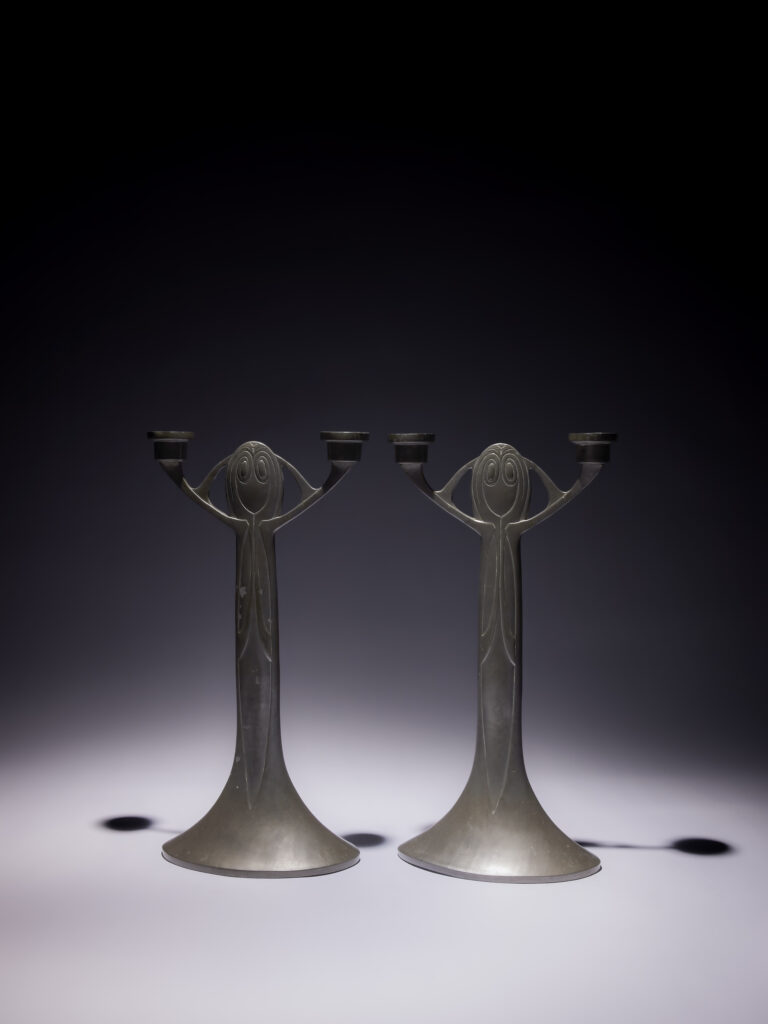
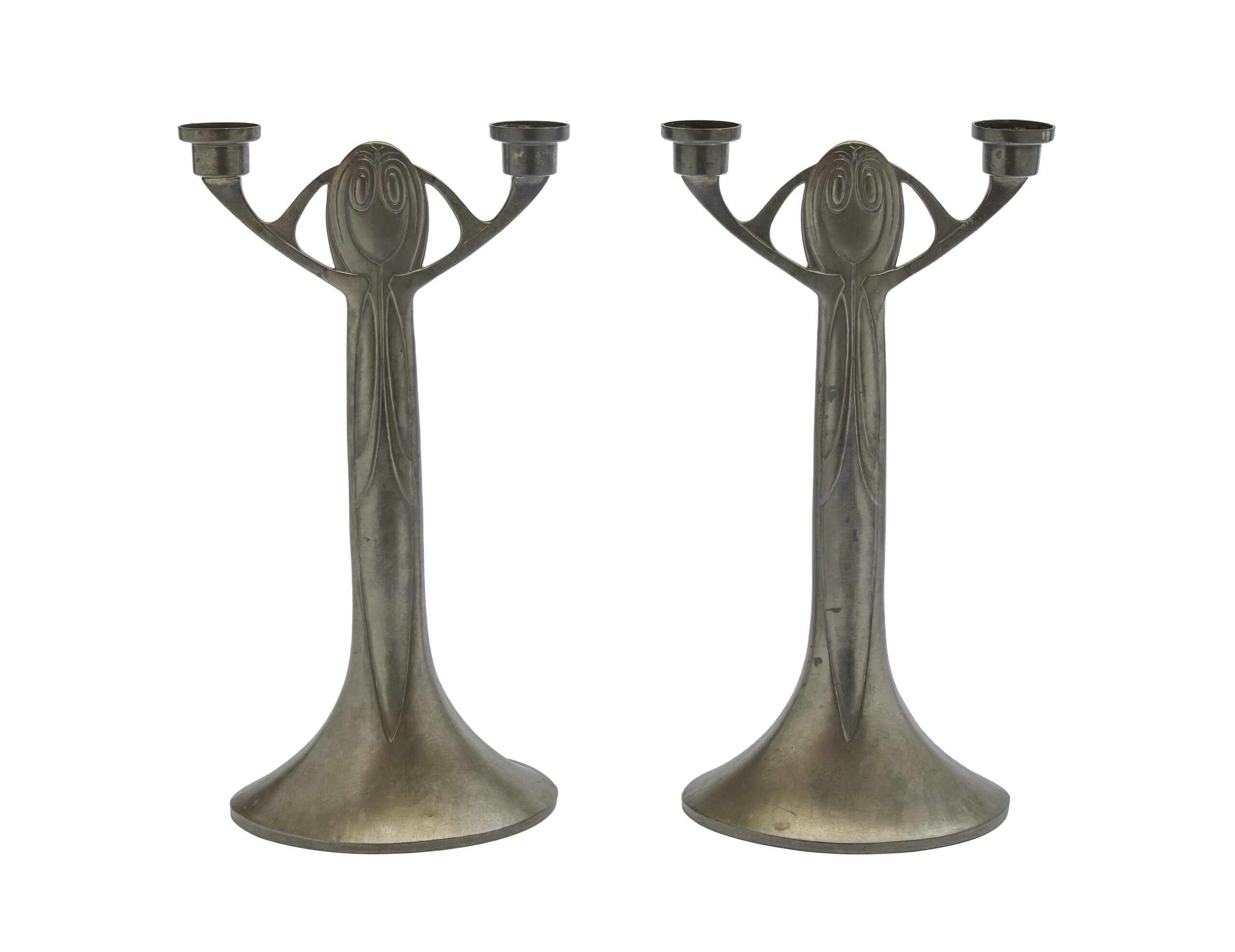
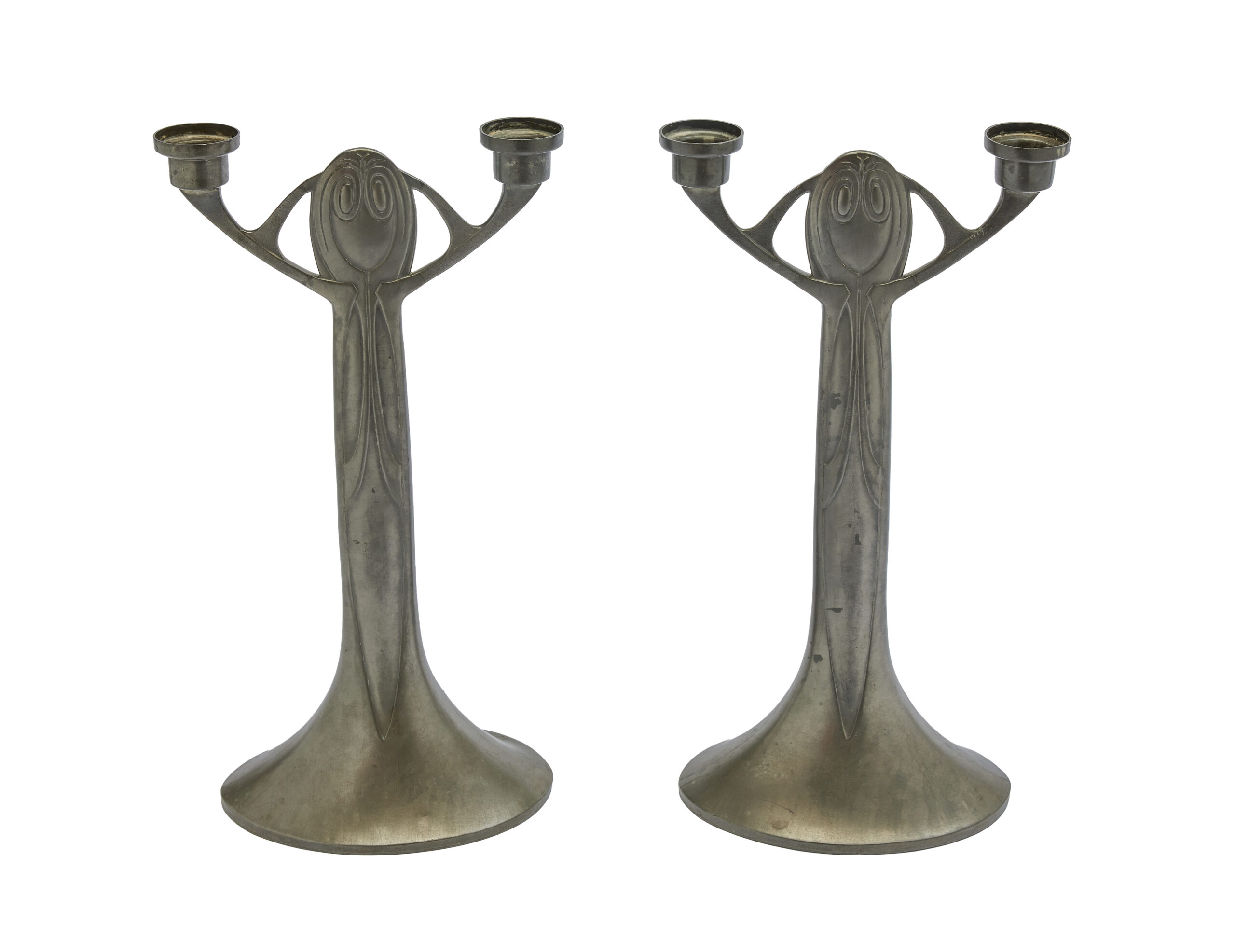
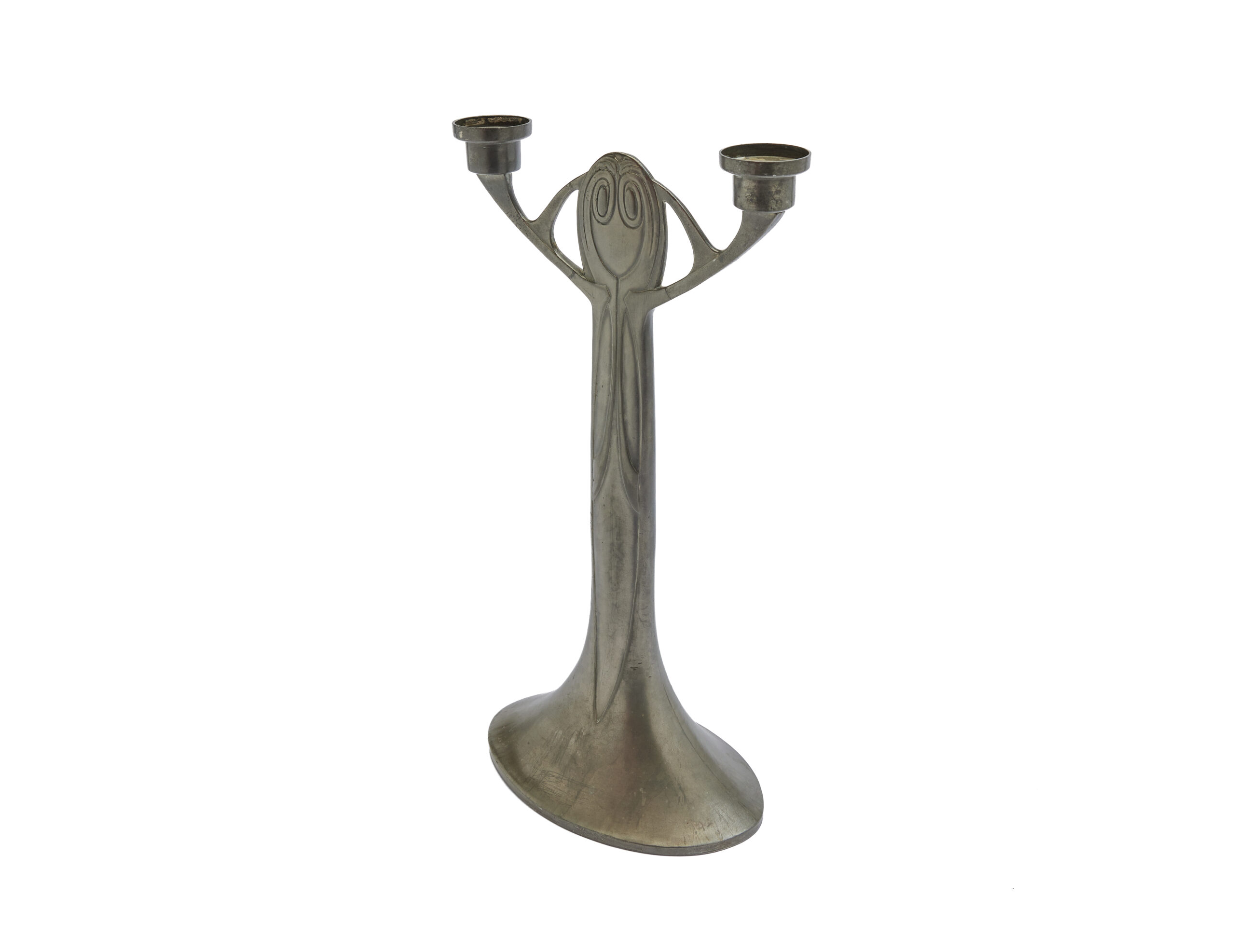
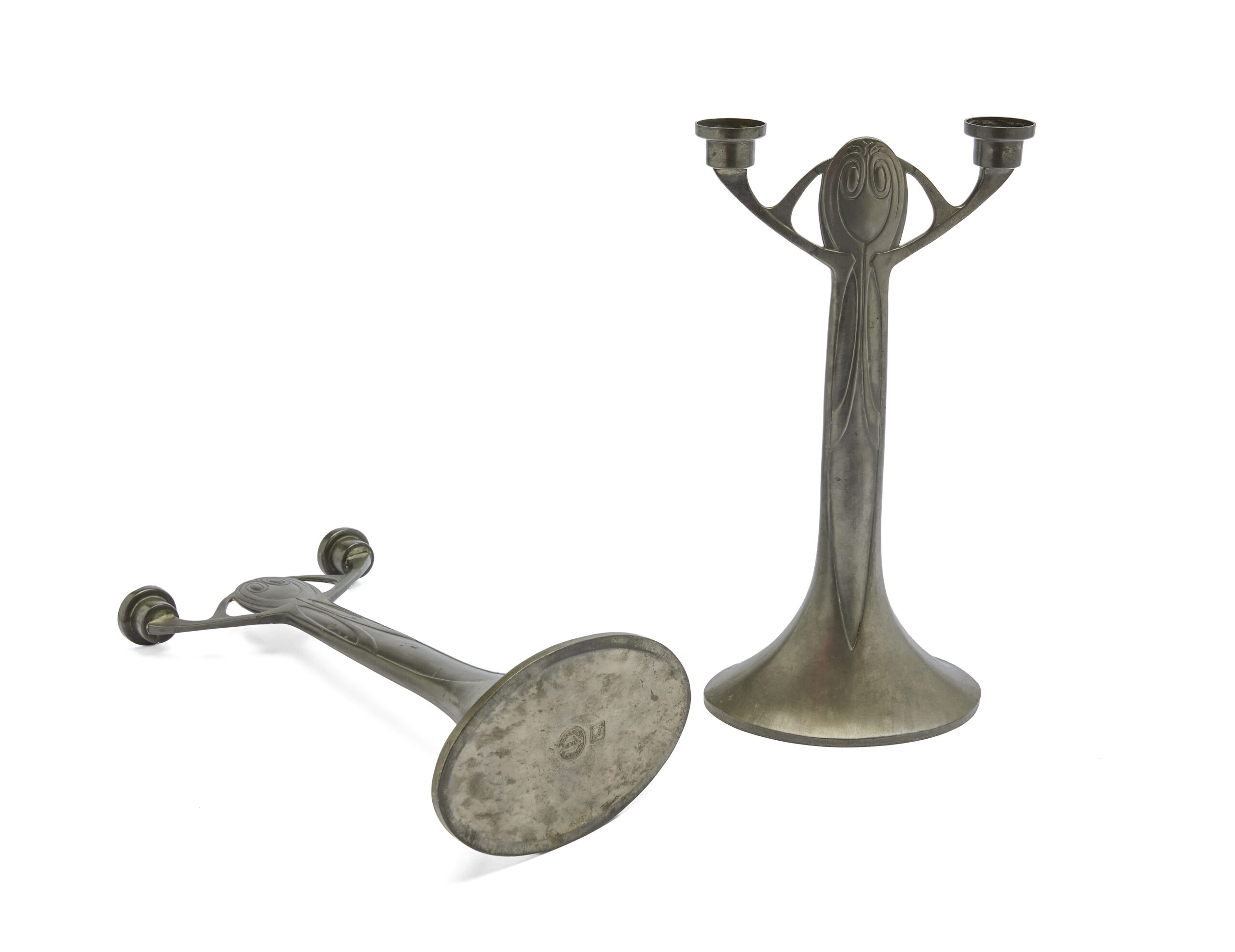
An exceptional and sculptural pair of Jugendstil candlesticks, designed around 1902 by the influential architect and designer Josef Maria Olbrich (1867–1908) and executed by Metallwarenfabrik Eduard Hueck in Lüdenscheid.
Olbrich was one of the leading representatives of the Vienna Secession and, in 1899, was among the artists invited by Grand Duke Ernst Ludwig to join the artists’ colony at the Mathildenhöhe in Darmstadt. His designs from this period rank among the most characteristic expressions of German Jugendstil, bringing architecture and the decorative arts together within the concept of the Gesamtkunstwerk.
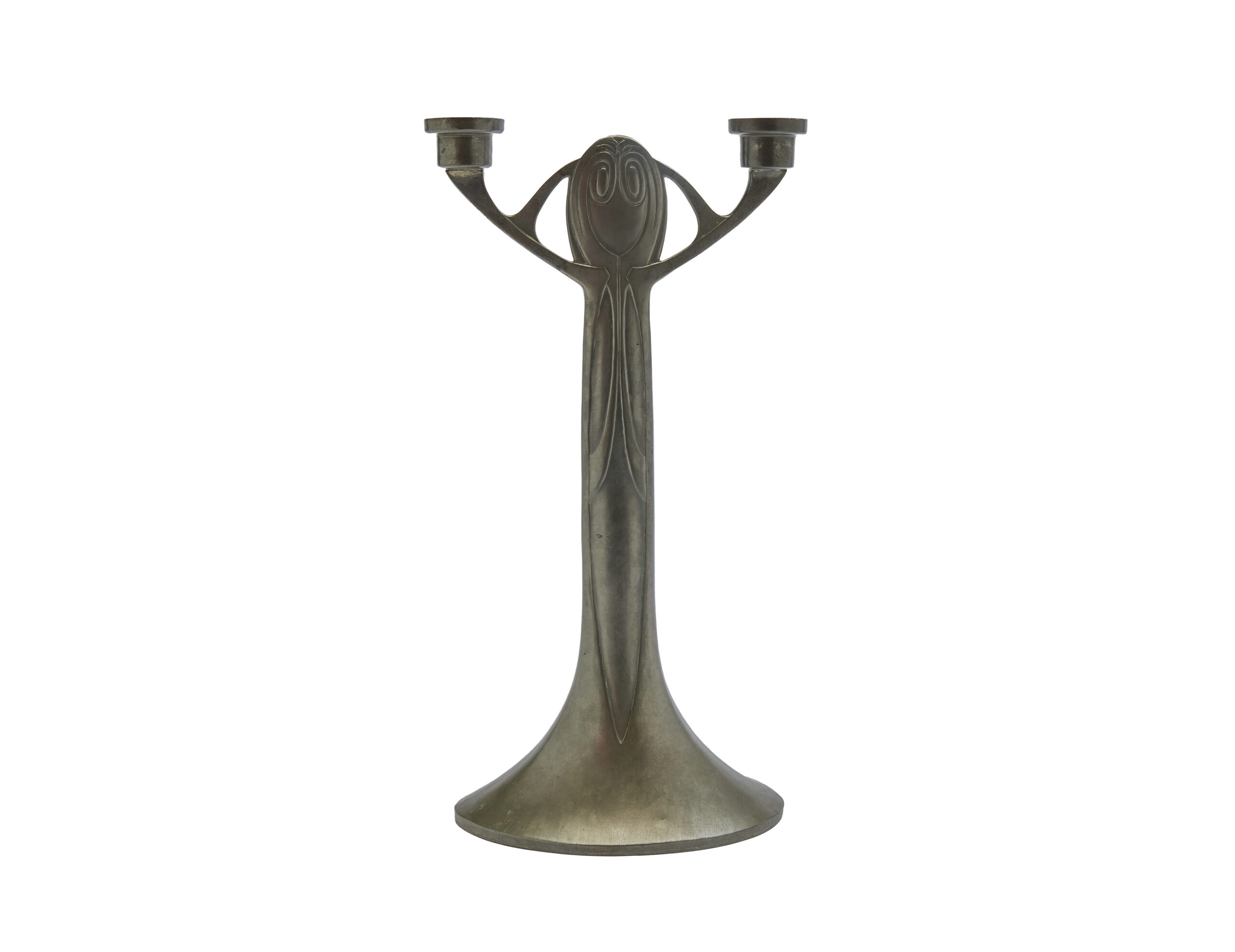
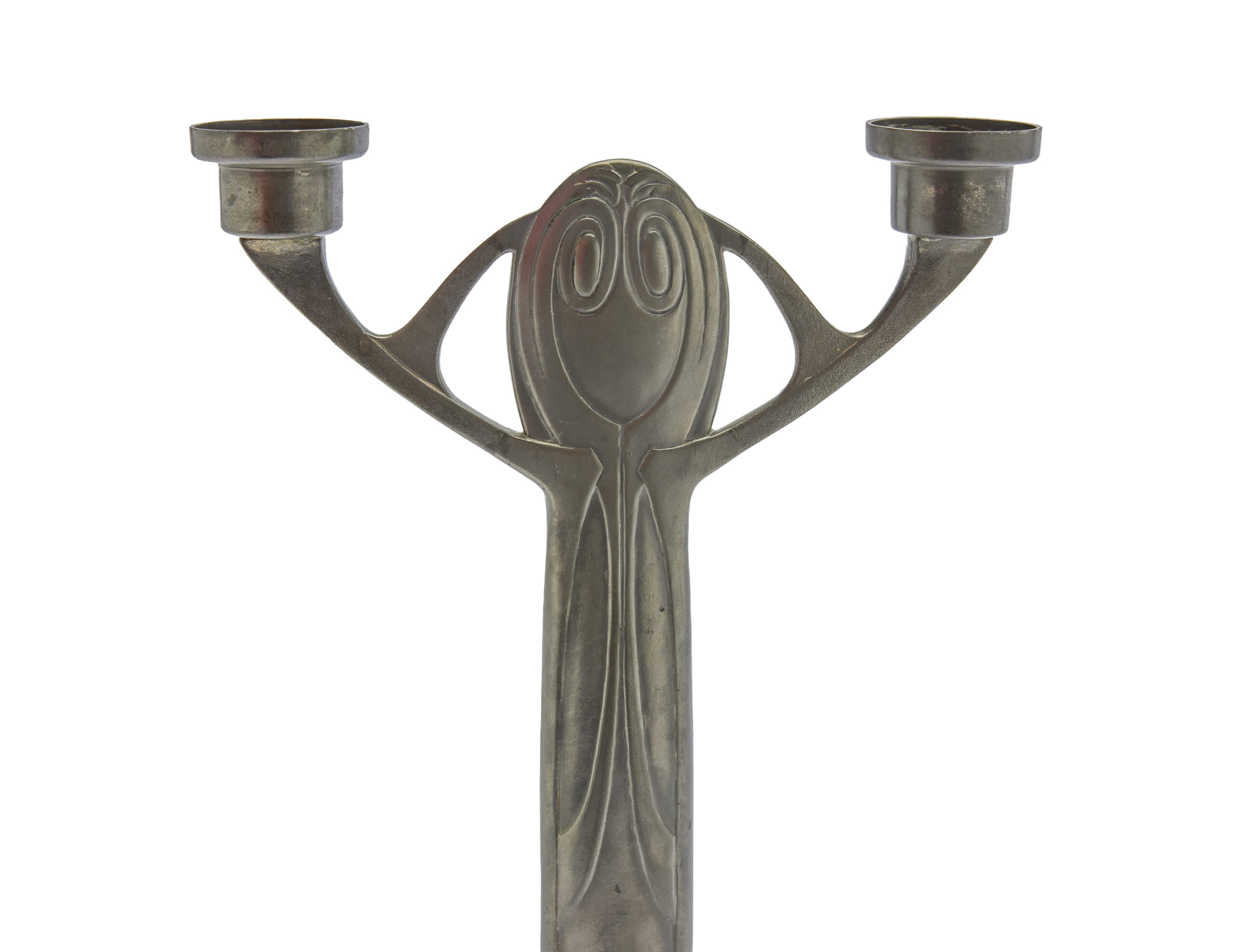
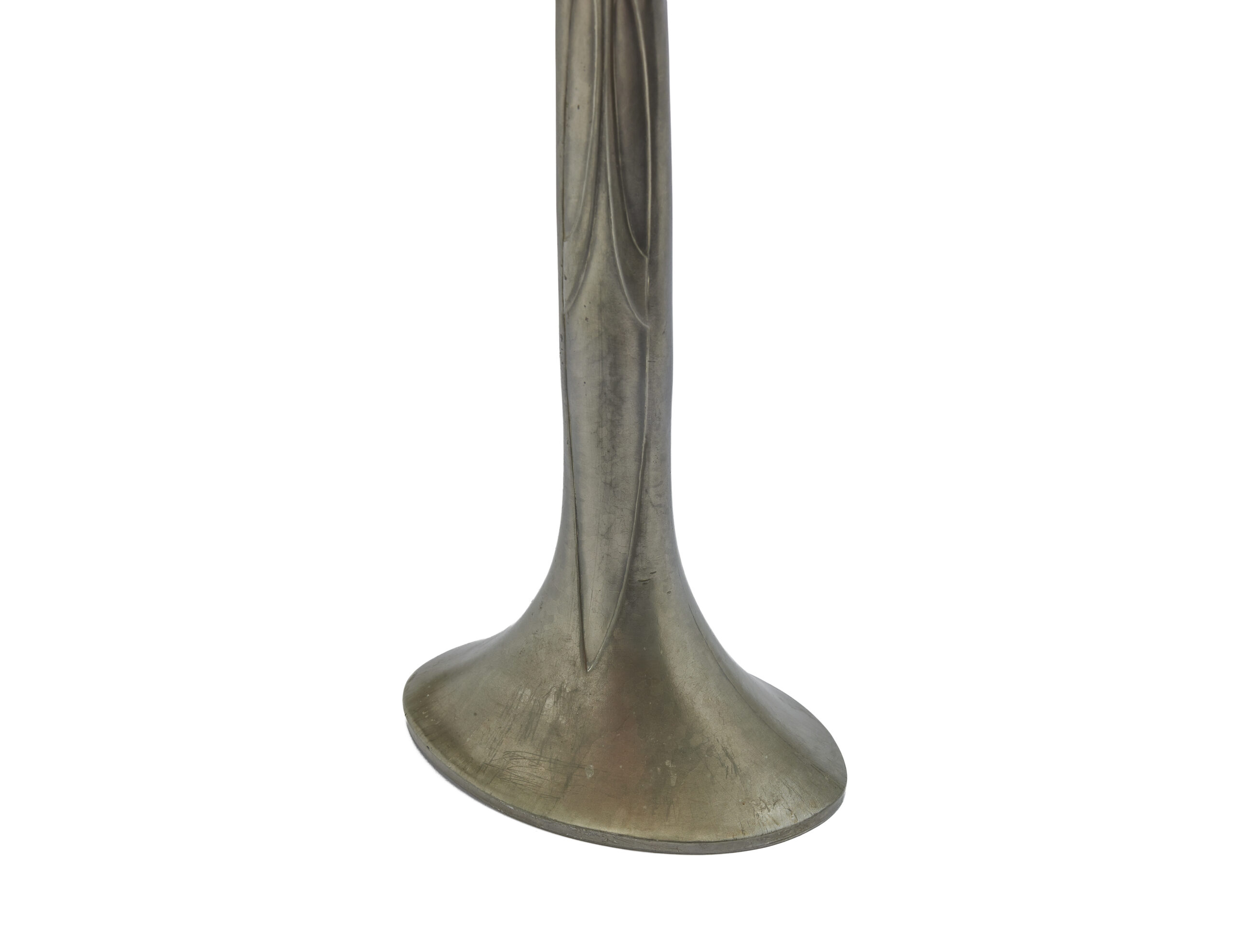
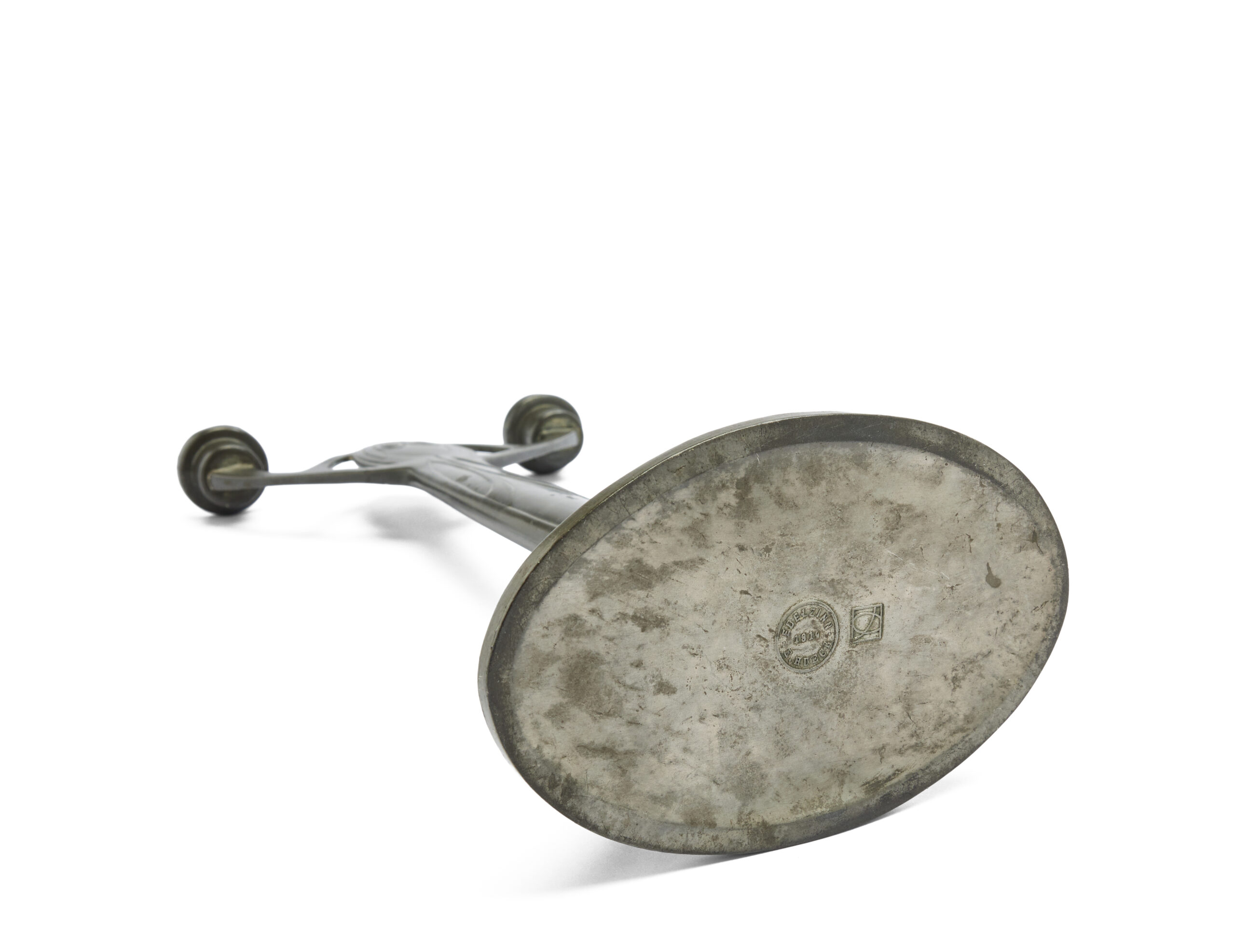
The candlesticks have broad oval bases that flow seamlessly into tall, trumpet-shaped stems. Towards the top, the form becomes distinctly flattened and terminates in an oval central element from which two elegantly curved arms emerge. These support cylindrical candle sockets with flat drip pans. The overall design is characterized by a pronounced verticality and a remarkable balance between geometric restraint and organic form.
Subtle low-relief decoration reinforces this architectural structure. Stylized leaf motifs rise along the stems, while the central oval sections are accentuated by a distinctive, almost abstract ornament. Together, the curved arms and central element create a powerful symmetrical composition characteristic of Olbrich’s design language around 1900.
The design is extensively documented in both contemporary and later literature and was executed in so-called Silberzinn. It was illustrated during Olbrich’s lifetime in Ernst Wasmuth’s Architektur von Olbrich and included in the catalogue of the 1904 Künstlerkolonie-Ausstellung in Darmstadt. The model was subsequently published in the major Olbrich exhibition held at the Mathildenhöhe in 1983, as well as in collection publications of the Museum Künstlerkolonie Darmstadt and the Bröhan-Museum in Berlin. The design is regarded as a particularly characteristic example of the Darmstadt Jugendstil.
This particular pair also has a remarkable and well-documented Dutch provenance. In 2000, the candlesticks were brought to the AVRO television programme Tussen Kunst & Kitsch by their then owners, Lei and Mientje Linssen. The discovery and art-historical significance of the candlesticks subsequently provided the basis for a dedicated episode of Tussen Kunst & Kitsch op Reis.
For this programme, Lei and Mientje Linssen travelled to Vienna together with Jugendstil expert Frans Leidelmeijer to further investigate the origins and art-historical context of the candlesticks. Particular attention was devoted to Josef Maria Olbrich, the Vienna Secession, and the Secession Building designed by Olbrich. The episode, Met Frans Leidelmeijer naar Wenen (With Frans Leidelmeijer to Vienna), was broadcast by AVRO on 29 July 2001. The programme therefore constitutes an exceptional part of the provenance of this specific pair, documenting the candlesticks within the historical context of Viennese and international Jugendstil.
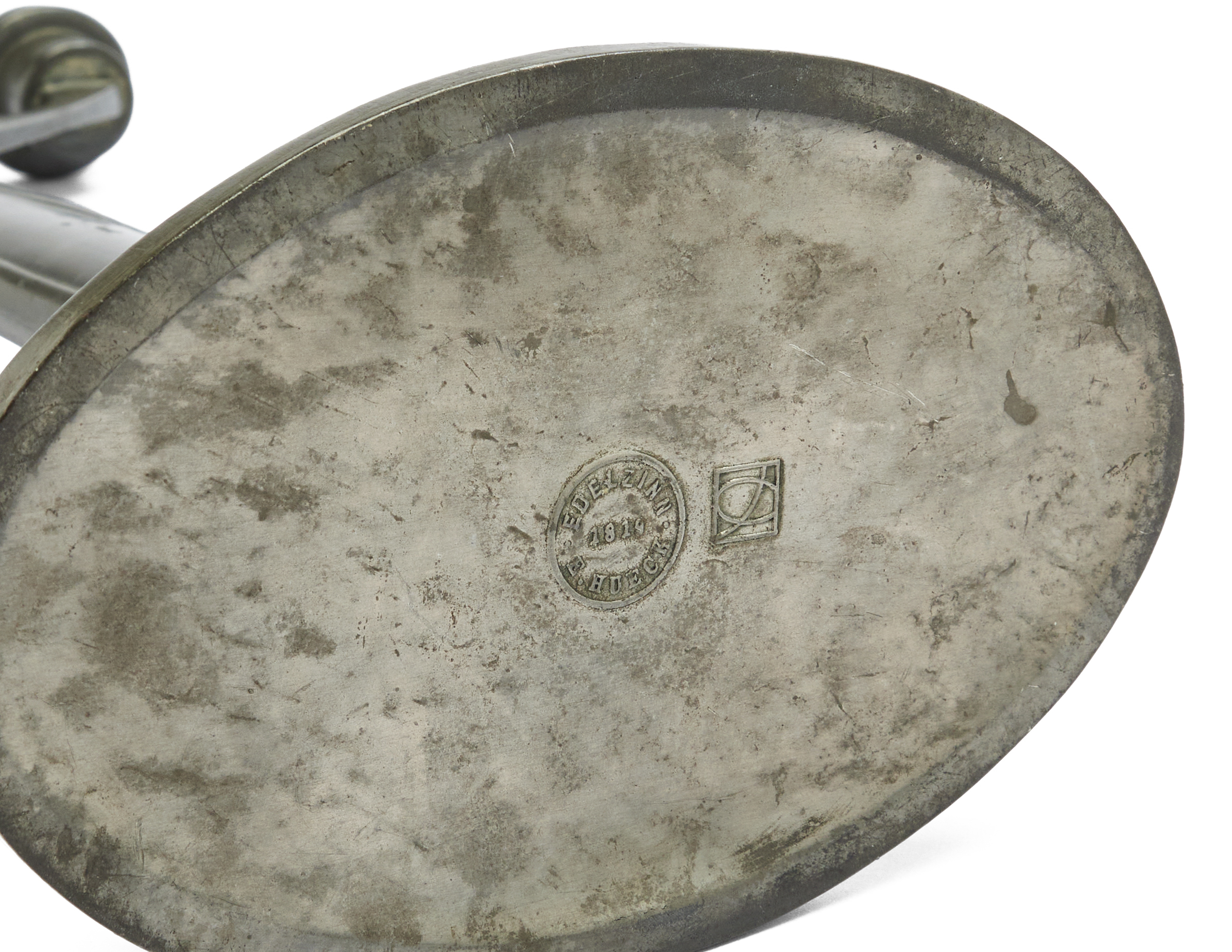
The undersides bear the artist’s monogram of Josef Maria Olbrich and the factory mark “E. HUECK EDELZINN 1819” in relief.
Discover the full story and provenance of these remarkable candlesticks in the detailed object description: Object description
Provenance:
Lei and Mientje Linssen, the Netherlands;
Tussen Kunst & Kitsch, AVRO, 2000;
Tussen Kunst & Kitsch op Reis, afl. 3, Met Frans Leidelmeijer naar Wenen, AVRO, uitgezonden 29 juli 2001.
Watch the episode via this link: Tussen Kunst & Kitsch op reis. Afl. 3: Met Frans Leidelmeijer naar Wenen.
Price: On request.
Interested in this object? Please click here to send us a message using the contact form.